
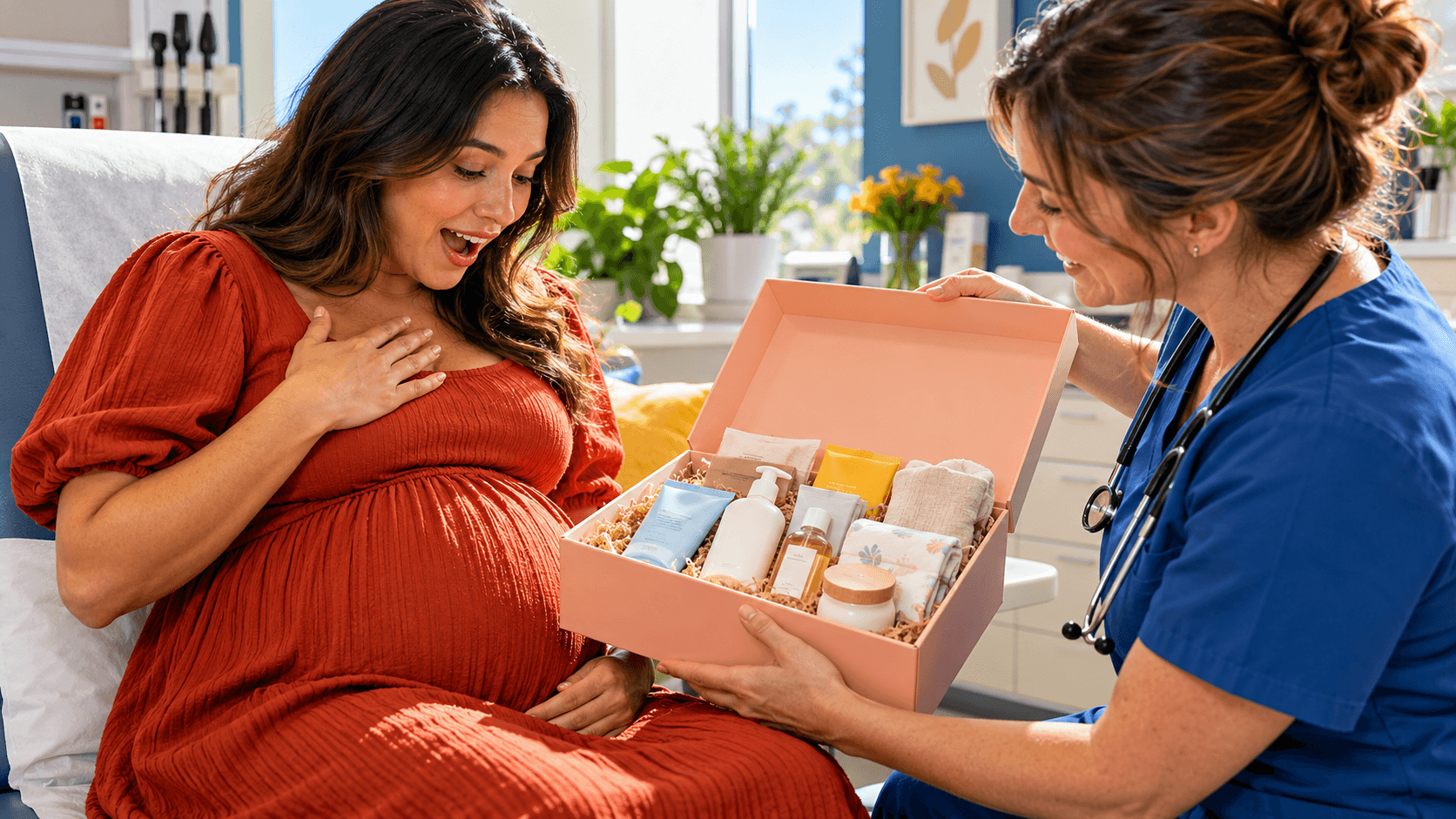
Clinic sampling works for pregnancy brands because it puts a real product in her hands in a high-trust setting — not another impression in a feed. In Greece alone, ELSTAT counted 68,467 live births in 2024 (down 4.2% from 2023). That is a finite, annual cohort: if you miss third trimester and the first days after birth, you wait a year.
Teams usually need one outcome: trial before the shopping list locks, plus enough context that the brand is remembered at the first shop.
The clinic window
68,467live births in Greece in 2024 (ELSTAT) — one annual cohort
Miss this window → wait for next year’s cohort
Why in-hand trial beats awareness alone
Arbitron and Edison Media Research’s Product Sampling Study (1,857 U.S. respondents) found that 35% of people who tried a sample bought that product on the same shopping trip, and more than half (58%) said they would buy it again — results widely reported by The New York Times and Marketing Charts. EMI / Mosaic’s EventTrack 2015 consumer survey went further on experiential trial: 65% purchased the product or service promoted at the event or visit, and 78% of those more inclined to buy said the chance to try it first was the reason.
What trial does to purchase
Pregnancy is sensory and habit-forming (skincare, nutrition, hygiene, services). A clinic kit removes purchase risk at the exact week she is building a repertoire — something a six-second ad cannot do.
Why the physical kit and guide still matter
Digital captures attention fast; physical media leaves a longer mark. A U.S. Postal Service OIG study with Temple University’s Center for Neural Decision Making found participants remembered physical ads better than digital ones a week later, with stronger emotional response and brain activity linked to product value and purchase intent. A maternity guide she keeps on the nightstand behaves more like that physical channel than a banner she scrolls past.
What good maternity sampling looks like in 2026
- Defined life-stage timing (third trimester), not random door-drops
- Transparent yearly reach by country — especially where births are falling
- Clear sample format (full-size vs mini) and guide options (print and/or digital)
- Follow-up only on valid consent: under EU rules, consent must be freely given, specific, informed and shown by a clear affirmative act
- Category exclusivity discussed in the contract, not assumed
Industry practice is also shifting toward trial plus first-party relationships. Mondelēz has publicly invested in mixing online and offline sampling and building first-party data ecosystems rather than relying on third-party cookies — the same logic brands use when a clinic kit leads to consented registration and CRM.
How START Pregnancy fits
In Southeast Europe, START Pregnancy is built for this window: samples in the kit, a printed or digital guide, and Online Platforms, CRM and targeted email that continue the conversation after registration. Care Direct’s wider model is a complete experience — sampling that expands digitally (Online Platform + CRM) — across Greece, Cyprus, Romania, Bulgaria, Serbia and further markets.
The START complete experience
Next step: review START Pregnancy for clinic reach and kit fit, then send a short brief with category, sample size and target markets.