
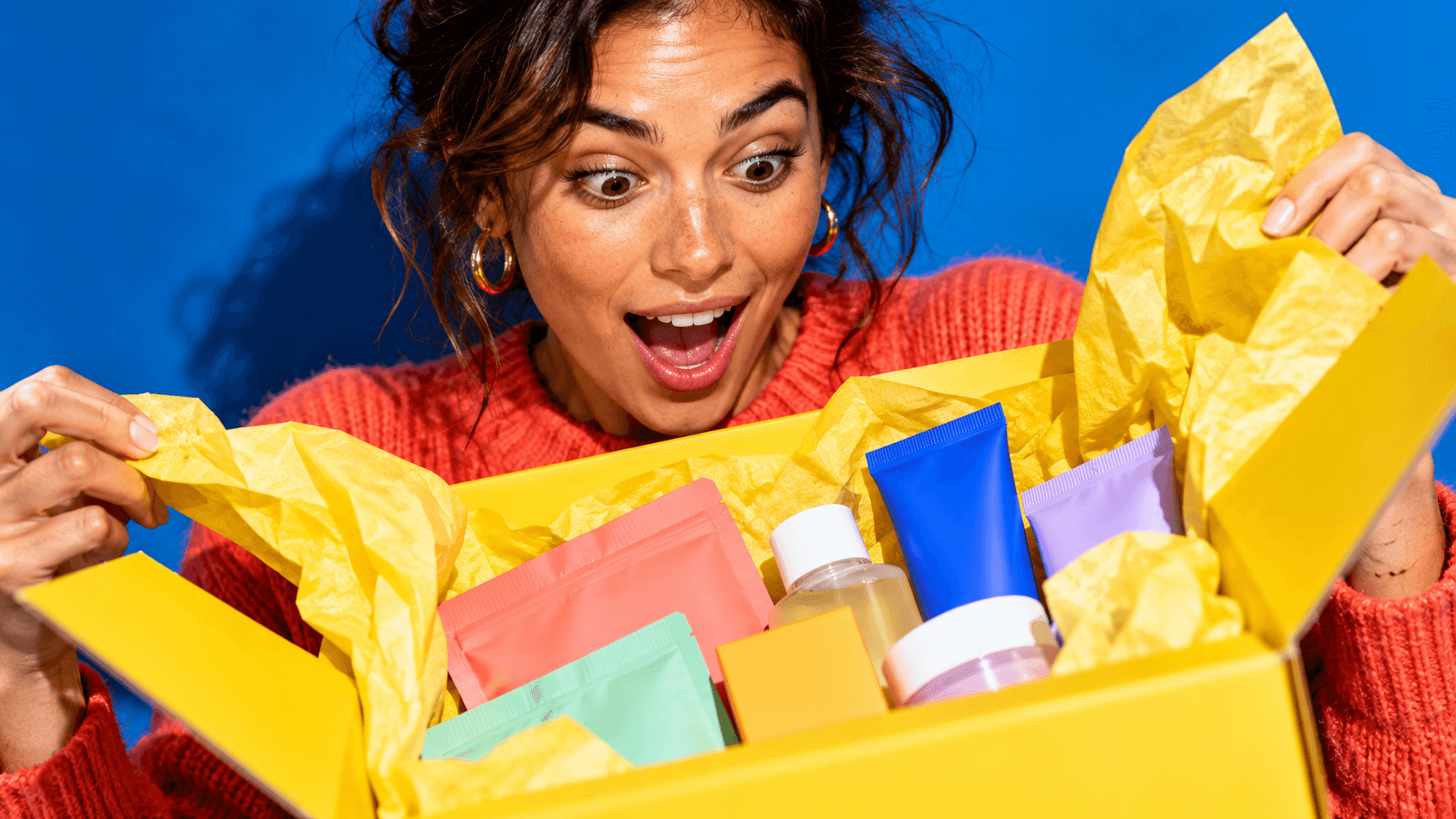
People like freebies because a free sample lowers risk, teaches them something real about the product, and feels like a gift — not only because “everyone loves free stuff.” Brand managers defending a sampling line need that distinction: freebies work through specific psychological and commercial mechanisms, which research has measured.
Two mechanisms: learning vs feeling obliged
A 2023 Journal of Electronic Commerce Research study of online free sampling (beauty and care recipients on a major Chinese sampling Online Platforms) separated two effects. Perceived diagnosticity — how much the sample helps someone judge quality — raised purchase intention. Perceived reciprocity — feeling one “owes” something after a gift — raised product ratings, but did not by itself lift purchase intention. In plain brand language: the freebie that teaches wins the basket; the freebie that only feels nice wins the review.
Why freebies work
Diagnosticity
Learning from the sample
Raises purchase intention — the freebie that teaches wins the basket.
Reciprocity
Feeling obliged
Raises ratings — but not purchase intention by itself.
That is why life-stage kits outperform random giveaways. A pregnancy or newborn sample is diagnostic at the exact week she is choosing brands. A flyer with no usable product is reciprocity without learning.
The brain notices sampled brands differently
Consumer neuroscience backs the “more salient after trial” idea. Nittono and Watari (Psychologia) used event-related brain potentials after food sampling: participants who tasted a sample showed a larger late positive potential (LPP) to that brand’s package than to other brands in the same category — an effect that did not appear for people who only read a leaflet. Tasting made the brand more motivationally salient than information alone.
What shoppers actually do after a freebie
- Arbitron / Edison Product Sampling Study: 35% of tryers bought the sampled product on the same shopping trip; 58% said they would buy it again (reported by The New York Times and Marketing Charts)
- EMI / Mosaic EventTrack 2015: 65% purchased what was promoted at an event or visit; 78% of those more inclined to buy credited the chance to try first; 89% said a sample made them more likely to buy that product
- YA / Survata (1,000 U.S. adults): 53% often or always buy after sampling; 77% said a sample would encourage them to try another product from the same brand
What trial does to purchase
Free samples can have long-run sales effects
Bawa and Shoemaker’s Marketing Science model and field experiments found free samples can produce measurable long-term brand sales effects — including acceleration of repeat purchase and expansion to buyers who would not have tried the brand — with effects observable up to about 12 months after the promotion, unlike many short coupon lifts. Effectiveness still varies by brand, so measurement belongs in the brief.
In-store field evidence: trial, switch, and social lift
Heilman and colleagues’ field study of grocery in-store free samples (British Food Journal) found sampling especially effective at inducing trial; it could switch planned-category shoppers to the promoted brand and draw unplanned shoppers into the category. Interaction with the sampler or other consumers at the stand also boosted post-sample purchase — a reminder that freebies are social as well as sensory.
What this means for a START-style brief
Design the freebie for diagnosticity first: enough product to learn, at a life stage when the choice is open, with a guide that explains use — not only a logo on a mini sachet. Then use consented follow-up so reciprocity and learning turn into CRM, not a one-off gift. That is the commercial reading of why people love freebies — and why random free stuff rarely moves share.
Pick the life stage that matches your category, open that program page, and join a START with a clear trial KPI.